What Is a Pour-Over Will and Do You Need One?
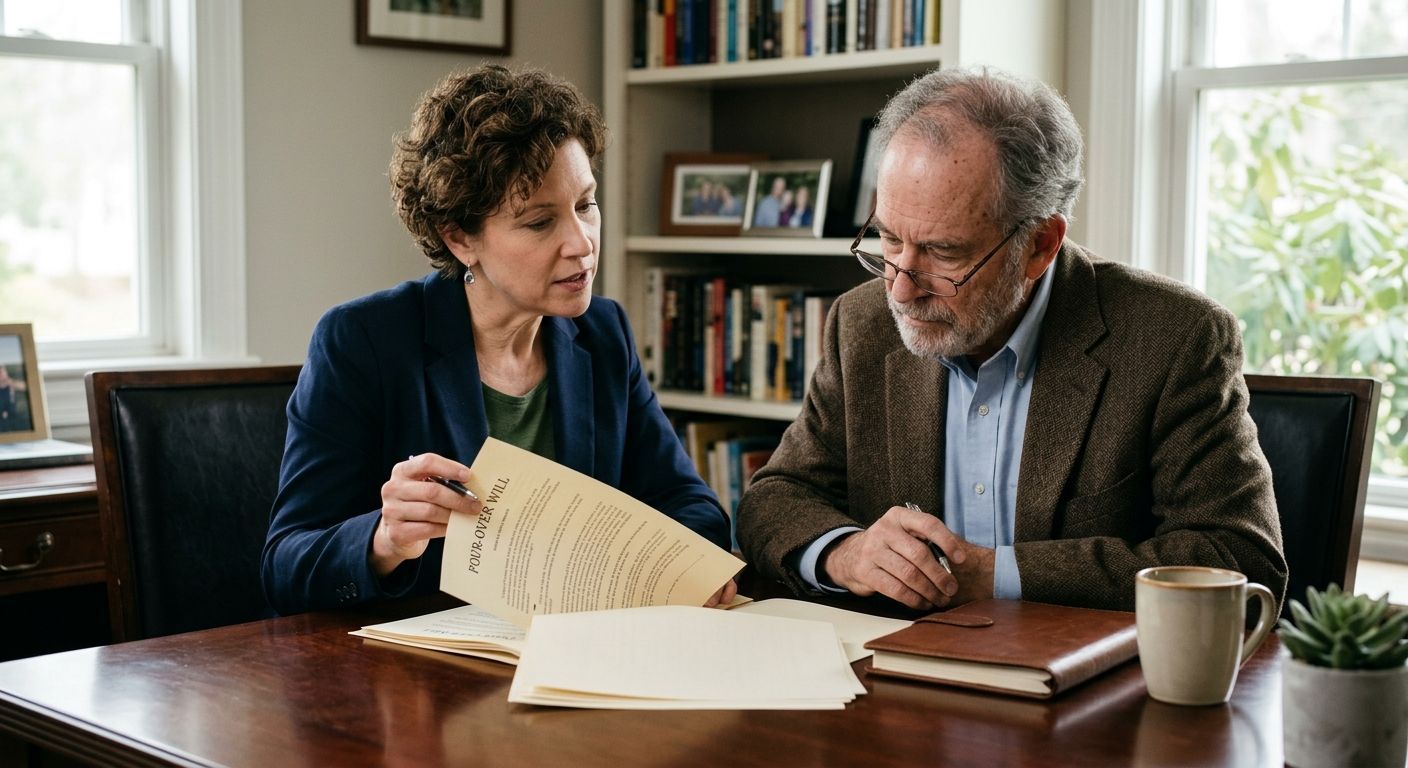
Many people believe that once they create a living trust, they no longer need a will. In reality, most comprehensive estate plans include both a trust and a special type of will called a pour-over will.
A pour-over will serves as an important safety net. It helps ensure that assets not transferred into your trust during your lifetime are still distributed according to your overall estate plan.
For Albuquerque families using trusts as part of their estate planning strategy, a pour-over will is often one of the most important supporting documents. Without one, assets left outside the trust could create unnecessary complications after death.
Understanding how a pour-over will works can help you create a stronger and more complete estate plan.
What Is a Pour-Over Will?
A pour-over will is a legal document that directs any assets owned in your individual name at the time of your death to be transferred into your living trust.
Instead of distributing assets directly to beneficiaries, the will "pours" those assets into the trust.
Once transferred into the trust, the assets are distributed according to the instructions contained in the trust agreement.
Think of a pour-over will as a backup plan designed to catch assets that may have been unintentionally left outside the trust.
Why Is a Pour-Over Will Necessary?
Even the most organized people occasionally forget to transfer assets into their trust.
Common examples include:
- Newly purchased property
- New bank accounts
- Investment accounts
- Vehicles
- Personal property
- Unexpected inheritances
Without a pour-over will, these assets may pass according to New Mexico intestate succession laws rather than your intended wishes.
A pour-over will helps ensure all assets ultimately become part of your trust structure.
How a Pour-Over Will Works
The process is relatively straightforward.
Step 1:
You create a revocable living trust.
Step 2:
You transfer most of your assets into the trust during your lifetime.
Step 3:
You create a pour-over will directing any remaining assets into the trust after death.
Step 4:
If assets remain outside the trust, the probate process transfers those assets into the trust.
Step 5:
The trust distributes assets according to your instructions.
The trust remains the primary vehicle for distribution, while the pour-over will serves as a protective backup.
What Happens Without a Pour-Over Will?
Without a pour-over will, assets left outside the trust may be distributed according to state law.
Potential consequences include:
- Unintended beneficiaries
- Additional probate complications
- Family disputes
- Delays in administration
- Loss of control over distributions
Many people spend significant time creating a trust only to undermine their goals by failing to include a pour-over will.
Does a Pour-Over Will Avoid Probate?
This is one of the most common misunderstandings.
The answer is: not necessarily.
Assets already inside the trust generally avoid probate.
However, assets discovered outside the trust at death may still need to go through probate before they can be transferred into the trust through the pour-over will.
The goal of the trust is to minimize probate.
The goal of the pour-over will is to prevent assets from being distributed outside the trust plan.
The best estate plans use both tools together.
Benefits of a Pour-Over Will
There are several reasons estate planning attorneys frequently recommend pour-over wills.
Creates a Unified Estate Plan
Instead of having assets distributed through multiple documents, everything eventually flows into one trust.
This creates:
- Consistency
- Simplicity
- Better administration
- Reduced confusion
Protects Forgotten Assets
Life changes constantly.
People open accounts, buy property, and receive inheritances throughout their lives.
A pour-over will helps capture assets that may have been overlooked.
Supports Trust-Based Planning
The trust remains the central estate planning document.
This allows you to maintain:
- Privacy
- Probate avoidance strategies
- Long-term distribution control
- Asset management provisions
Simplifies Future Updates
Many trust provisions can be updated without changing beneficiary designations on every asset.
This flexibility makes ongoing estate planning easier.
Can a Pour-Over Will Name Guardians for Children?
Yes.
One important function of a pour-over will is naming guardians for minor children.
A trust cannot nominate guardians.
If you have children under 18, your will is often the document that identifies who should care for them if both parents pass away.
This is another reason why a trust does not replace a will.
Most families need both.
Who Should Consider a Pour-Over Will?
Almost anyone using a revocable living trust should strongly consider including a pour-over will.
This is particularly important for:
- Homeowners
- Parents of minor children
- Retirees
- Business owners
- Individuals with multiple assets
- Blended families
The more assets you own, the greater the likelihood something may accidentally remain outside the trust.
Common Mistakes People Make
Several errors frequently create problems after death.
Assuming the Trust Alone Is Enough
Many people mistakenly believe creating a trust eliminates the need for a will.
Without a pour-over will, assets outside the trust may create complications.
Failing to Fund the Trust
A trust only controls assets it actually owns.
Creating the trust document is only the first step.
Assets must be properly transferred.
Not Updating New Assets
When people purchase new property, they sometimes forget to transfer ownership into the trust.
A pour-over will provides an important safety net.
Using Outdated Documents
Estate plans should be reviewed regularly.
Major life changes may require updates to both the trust and pour-over will.
Real Albuquerque Example
An Albuquerque resident established a revocable living trust several years before retirement.
Most of his assets were properly transferred into the trust, including his home and investment accounts.
However, he later opened a new savings account and purchased a small parcel of land that never made it into the trust.
After his death, the pour-over will directed those assets into the trust during probate.
Because the trust already contained clear distribution instructions, the assets ultimately passed according to his wishes.
Without the pour-over will, those assets could have been distributed differently under New Mexico law.
How a Pour-Over Will Fits Into a Complete Estate Plan
A comprehensive estate plan often includes:
- Revocable Living Trust
- Pour-Over Will
- Durable Power of Attorney
- Healthcare Power of Attorney
- Advance Healthcare Directive
- Beneficiary Designation Review
Each document serves a specific purpose.
Together, they create a coordinated strategy for protecting your family and assets.
FAQ: Pour-Over Wills
What is the main purpose of a pour-over will?
Its primary purpose is to transfer assets left outside a trust into the trust after death.
Do I need a pour-over will if I have a trust?
In most cases, yes. It serves as a backup mechanism for overlooked assets.
Does a pour-over will avoid probate?
Not necessarily. Assets outside the trust may still go through probate before entering the trust.
Can a pour-over will name guardians for children?
Yes. This is one of the most important reasons many parents need a will even if they have a trust.
How often should I review my pour-over will?
Most estate planning attorneys recommend reviewing estate planning documents every three to five years or after major life changes.
Call to Action
A trust is a powerful estate planning tool, but it works best when paired with a properly drafted pour-over will. Together, these documents can help ensure your wishes are followed and your family is protected.
At Hernandez Law, LLC, we help Albuquerque families create complete estate plans that include wills, trusts, powers of attorney, and probate-avoidance strategies.
Call (505) 228-5912 today to schedule a consultation.
Hernandez Law, LLC
1331 Park Ave SW Unit #908
Albuquerque, NM 87102
By appointment only.
Recent Posts


Schedule a Confidential Appointment
You will meet one-on-one. Your situation will be treated with discretion. Whether you are trying to get your own affairs in order or you are dealing with the estate of someone who has passed, reaching out is the first step toward clarity. Call or email to request your appointment.