Estate Planning for Blended Families in New Mexico
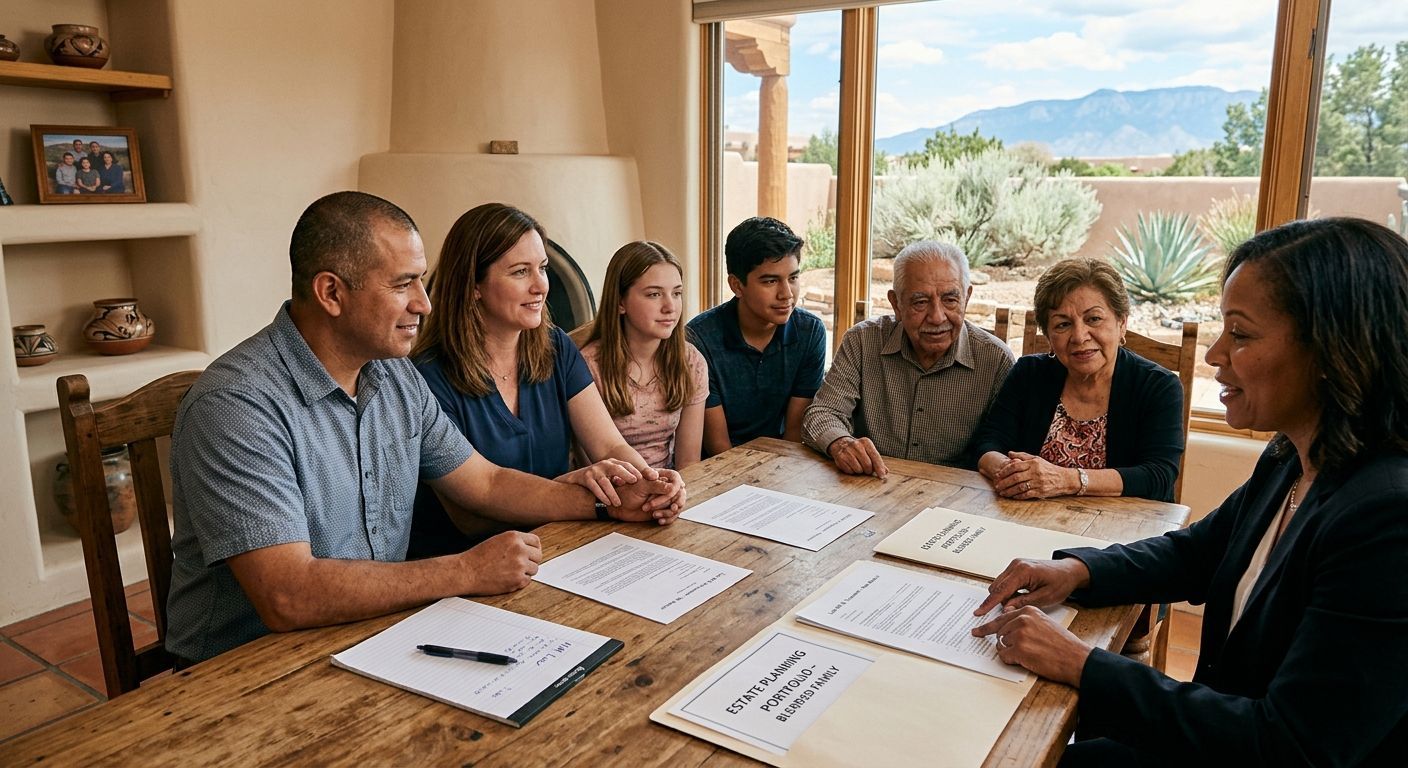
Estate planning can be challenging for any family, but it becomes significantly more complex when a blended family is involved. Second marriages, stepchildren, former spouses, and children from previous relationships can create unique legal and emotional issues that traditional estate plans may not adequately address.
Without proper planning, a blended family estate can quickly become the source of conflict, confusion, and costly legal disputes. Even well-intentioned decisions can lead to unintended consequences if legal documents are not carefully structured.
For New Mexico families, creating a thoughtful estate plan is one of the best ways to protect loved ones, preserve family relationships, and ensure assets are distributed according to your wishes.
What Is a Blended Family?
A blended family generally includes:
- Married couples with children from previous relationships
- Remarried individuals
- Stepchildren
- Adopted children
- Long-term partners with separate family histories
Blended families are increasingly common throughout Albuquerque and New Mexico. While these family structures provide many benefits, they also create estate planning challenges that traditional wills may not fully address.
Why Estate Planning Is Different for Blended Families
Many estate planning strategies that work well for traditional families can create problems for blended families.
For example, a simple will that leaves everything to a surviving spouse may unintentionally disinherit children from a previous marriage.
Likewise, leaving assets directly to children could leave a surviving spouse without adequate financial resources.
Balancing the needs of multiple loved ones requires careful planning.
The Most Common Concern: Protecting Both a Spouse and Children
One of the biggest concerns for blended families is ensuring that both the surviving spouse and children are protected.
Many people want:
- Their spouse to remain financially secure
- Their children to eventually receive an inheritance
- Their wishes honored after death
Unfortunately, these goals can sometimes conflict without proper planning.
Example of an Unintended Outcome
Imagine a husband leaves everything outright to his second wife.
Years later:
- The wife remarries
- She updates her estate plan
- Her own children inherit everything
The husband's children from his first marriage may ultimately receive nothing.
This outcome occurs more often than many families realize.
How Trusts Help Blended Families
Trusts are often one of the most effective tools for blended family planning.
Unlike a simple will, a trust can provide detailed instructions regarding how assets are managed and distributed.
A trust may allow:
- A spouse to receive income during their lifetime
- Continued use of a family home
- Financial support for surviving family members
- Preservation of assets for children
This flexibility is one reason many blended families choose trust-based estate planning.
Protecting Children from Previous Relationships
Many parents want to ensure their biological children receive an inheritance regardless of future family changes.
A properly structured trust can:
- Reserve specific assets for children
- Delay distributions until certain ages
- Protect inheritances from creditors
- Prevent unintended disinheritance
Without these protections, assets may be distributed differently than intended.
Addressing Stepchildren
One common misconception is that stepchildren automatically inherit under New Mexico law.
In most situations, they do not.
Unless stepchildren are:
- Legally adopted, or
- Specifically included in estate planning documents
They may have no inheritance rights.
If you want stepchildren to receive assets, your estate plan should clearly identify them and specify your intentions.
Avoiding Family Disputes
Estate disputes are often more common in blended families because multiple parties may have competing expectations.
Common sources of conflict include:
- Unequal inheritances
- Ambiguous instructions
- Changes made late in life
- Perceived favoritism
- Real estate ownership issues
A clear estate plan helps reduce uncertainty and provides guidance during emotionally difficult times.
Choosing the Right Executor or Trustee
Executor and trustee selection becomes especially important in blended family situations.
You should consider:
- Neutrality
- Organizational skills
- Trustworthiness
- Ability to manage conflict
In some cases, naming a professional fiduciary or attorney may reduce tension among beneficiaries.
The Importance of Beneficiary Designations
Many people focus on wills and trusts while overlooking beneficiary designations.
Assets that commonly pass through beneficiary designations include:
- Life insurance
- Retirement accounts
- Annuities
- Payable-on-death accounts
Failing to update these designations after divorce or remarriage can create serious problems.
In some cases, outdated beneficiary forms override instructions in a will.
Planning for Minor Children
Blended families with younger children face additional concerns.
Parents should consider:
- Guardianship designations
- Educational funding
- Asset management
- Future distribution schedules
A trust can provide long-term management and protection until children reach appropriate ages.
Protecting the Family Home
The family residence is often one of the most valuable and emotionally significant assets.
Questions commonly include:
- Can the surviving spouse remain in the home?
- Who ultimately inherits the property?
- Who pays maintenance costs?
- What happens if the spouse remarries?
A trust can provide detailed instructions that address these concerns.
Special Considerations for Business Owners
Business ownership adds another layer of complexity.
A blended family business owner should consider:
- Succession planning
- Ownership transitions
- Buy-sell agreements
- Fair treatment of beneficiaries
Without proper planning, disputes involving business assets can become particularly expensive.
Common Estate Planning Mistakes in Blended Families
Several mistakes occur frequently.
Relying Solely on a Simple Will
Simple wills often lack the flexibility needed for blended family situations.
Failing to Update Documents After Remarriage
Marriage, divorce, and remarriage should always trigger an estate plan review.
Ignoring Beneficiary Designations
Outdated beneficiary forms remain one of the most common causes of unintended inheritances.
Assuming Family Members Will "Work It Out"
Even close families may experience disagreements after a death.
Clear written instructions are far more reliable than assumptions.
Not Using Trust Planning
Trusts often provide solutions that wills alone cannot achieve.
Real Albuquerque Example
A blended family in Albuquerque sought help after the husband remarried later in life.
He wanted:
- His wife to remain financially secure
- His adult children from a prior marriage to inherit family assets
- Minimal conflict among beneficiaries
Hernandez Law, LLC helped create a trust that allowed the surviving spouse to use certain assets during her lifetime while preserving the remaining estate for the children.
The plan provided protection for both generations while reducing the risk of future disputes.
Benefits of Professional Estate Planning for Blended Families
Blended family planning often requires customized solutions.
Professional guidance can help:
- Balance competing interests
- Avoid probate complications
- Clarify inheritance intentions
- Protect children and spouses
- Reduce future disputes
The more complex the family structure, the more valuable thoughtful planning becomes.
FAQ: Estate Planning for Blended Families
Do stepchildren automatically inherit in New Mexico?
Generally no, unless they have been legally adopted or are specifically included in estate planning documents.
Can I provide for my spouse and children at the same time?
Yes. Trusts are commonly used to accomplish this goal.
Should I update my estate plan after remarriage?
Absolutely. Remarriage is one of the most important reasons to review estate planning documents.
Can beneficiary designations override a will?
Yes. Beneficiary designations often control certain assets regardless of what a will says.
Are trusts better than wills for blended families?
In many situations, yes. Trusts provide greater flexibility and control over asset distribution.
Call to Action
Blended families deserve estate plans that reflect their unique circumstances. The right plan can protect your spouse, preserve assets for your children, and help avoid future conflicts.
At Hernandez Law, LLC, we help Albuquerque families create customized wills and trusts designed specifically for blended family situations.
Call (505) 228-5912 today to schedule a consultation.
Hernandez Law, LLC
1331 Park Ave SW Unit #908
Albuquerque, NM 87102
By appointment only.
Recent Posts


Schedule a Confidential Appointment
You will meet one-on-one. Your situation will be treated with discretion. Whether you are trying to get your own affairs in order or you are dealing with the estate of someone who has passed, reaching out is the first step toward clarity. Call or email to request your appointment.